Chatbots answer. AI Agents act.
A chatbot waits for a question and gives an answer. That was impressive in 2024. In 2026, it is not enough.
AI Agents go a critical step further: they recognize situations, make autonomous decisions, and execute multi-step tasks. Without a human triggering every action. On a website, that means: the agent identifies what a visitor needs and gets it done. Not just answer. Get it done.
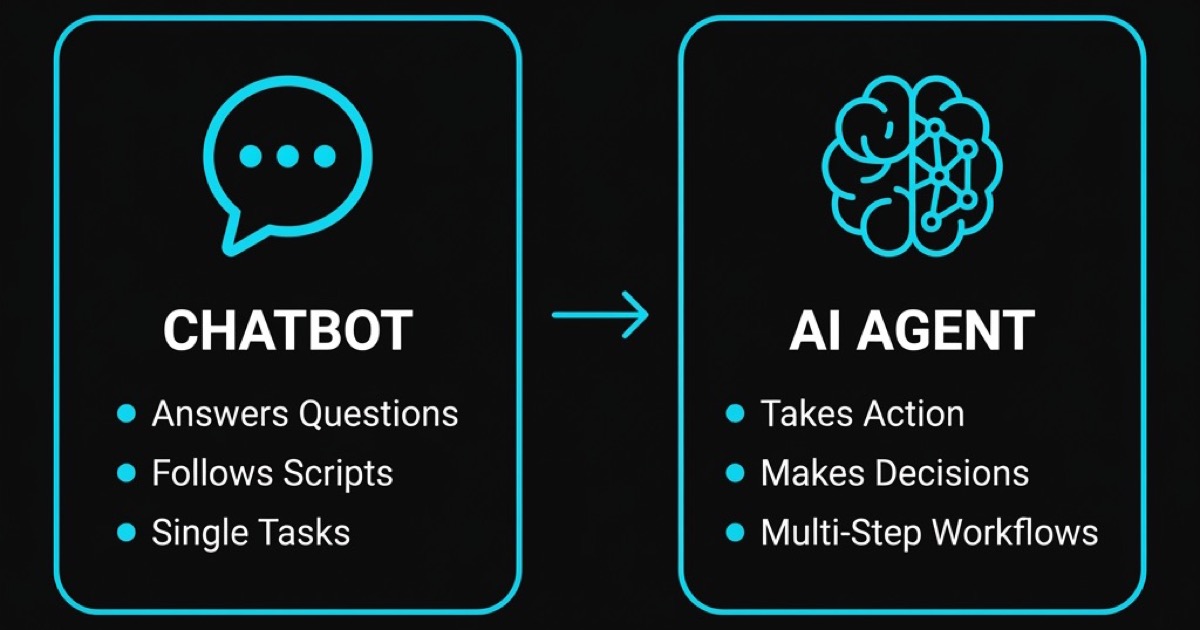
What separates AI Agents from chatbots
| Feature | Chatbot | AI Agent |
|---|---|---|
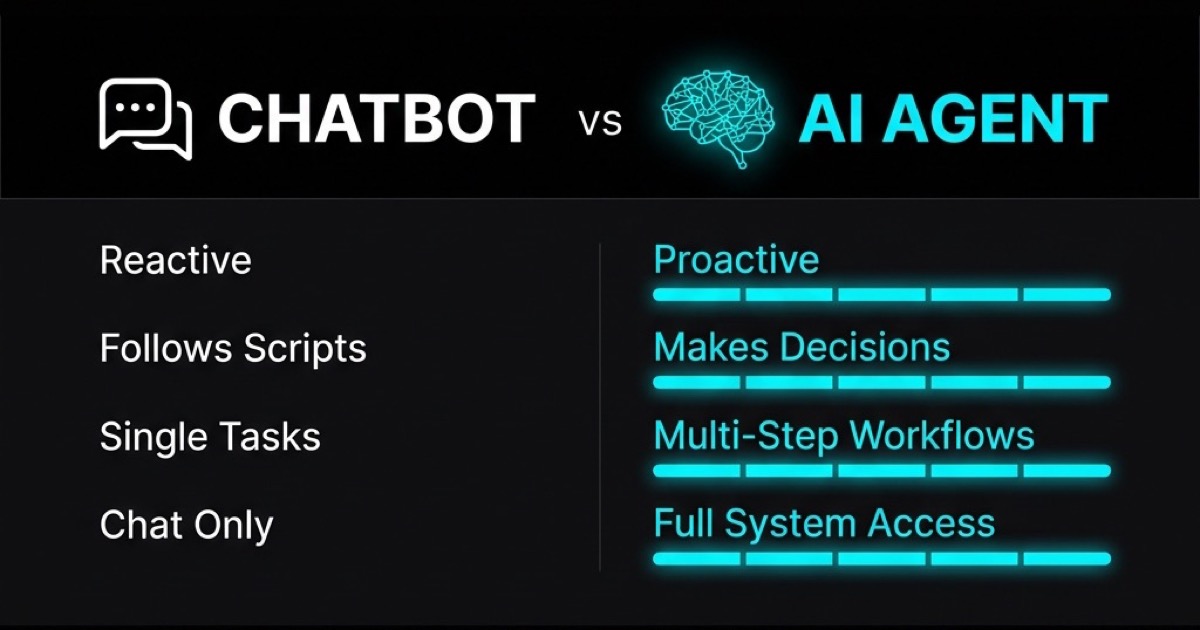
| Behavior | Reactive (waits for input) | Proactive (recognizes context) |
| Tasks | Single question-answer pairs | Multi-step workflows |
| Decisions | Follows scripts | Makes autonomous decisions |
| System access | None or limited | CRM, calendar, databases, APIs |
| Context | Current conversation | Visitor history, page behavior, company data |
| Learning | Static (manual updates) | Continuous from interactions |
The difference is fundamental. A chatbot is a tool. An AI Agent is a digital employee.
5 real use cases on your website
1. Intelligent lead qualification
An AI Agent observes visitor behavior: Which pages are viewed? For how long? In what sequence? Based on this behavior, the agent decides whether and when to engage.
Example: A visitor reads your pricing page, switches to a case study, and returns to pricing. The agent detects a buying signal and starts a contextual conversation: "Comparing options? I can show you which package fits your situation in 60 seconds."
The result: 3x higher conversion rate than a passive contact form (Drift, 2025).
2. Personalized product consultation
The agent accesses your product database and combines that information with what it knows about the visitor. Industry, company size, browsing behavior.
Instead of presenting all products equally, the agent shows exactly the solution that fits. With specific pricing, relevant case studies, and a direct path to booking.
3. Automatic proposal generation
For standardizable services, an AI Agent can create a complete proposal: scope, price, timeline. The visitor answers 4 to 5 questions, and the agent generates a PDF proposal in real time.
For visitors outside business hours (35% of all B2B visits according to Drift), this means no waiting for a callback. The process runs immediately.
4. Intelligent routing and escalation
The agent recognizes when a human should take over. Not based on a rigid rule ("forward after 3 questions"), but based on the conversation flow. Complex technical inquiry? Route to engineering. Price negotiation? Route to sales. Support issue? Route to customer service.
The agent hands over all collected information, so the visitor never has to repeat themselves.
5. Proactive recovery
A visitor adds products to the cart and leaves. Or fills out a form halfway and abandons it. The AI Agent detects these patterns and reacts in real time: a targeted offer, a simplified process, or an alternative contact method.
Baymard Institute puts the average cart abandonment rate at 70.19%. AI Agents reduce this rate by 15 to 25%, because they intervene at the decisive moment.
The technology behind AI Agents
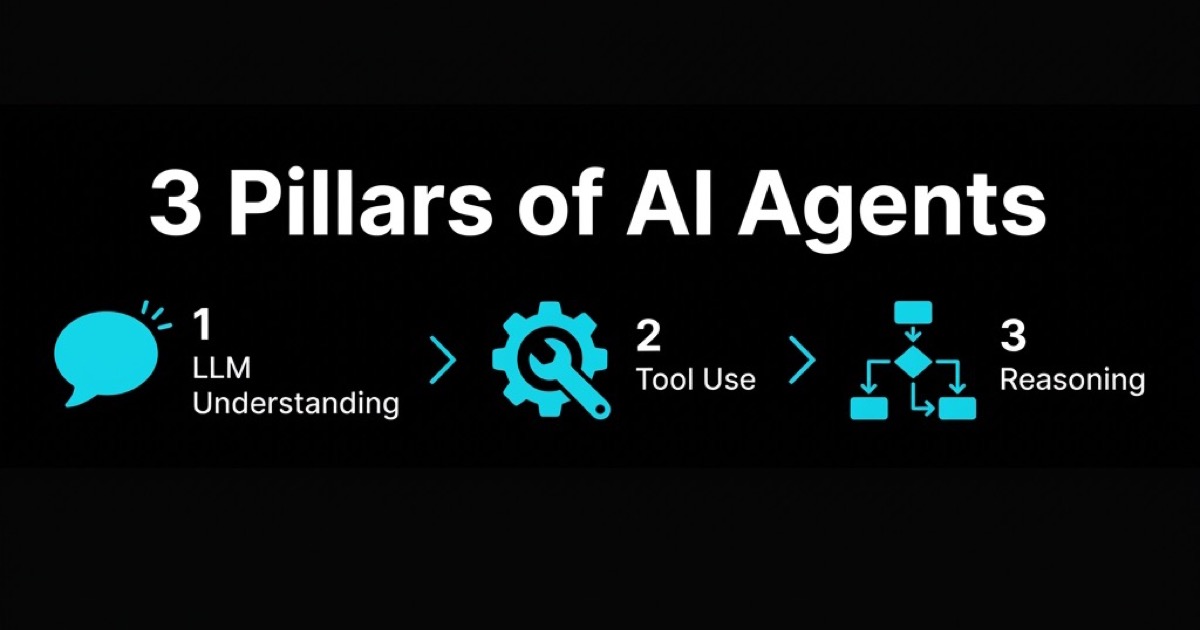
AI Agents are built on three core components:
1. Large Language Models (LLMs) for language understanding. The foundation. Models like Claude or GPT-4 enable natural conversations and understanding of complex queries.
2. Tool use and function calling. The critical difference from chatbots. AI Agents can call external systems: retrieve CRM data, create calendar entries, send emails, query databases. Any action reachable via an API can be executed by an agent.
3. Reasoning and planning. Modern agents plan multi-step actions. They break complex tasks into subtasks, execute them, and adjust their plan when the situation changes. This is not science fiction. This is available technology.
What AI Agents mean for your business
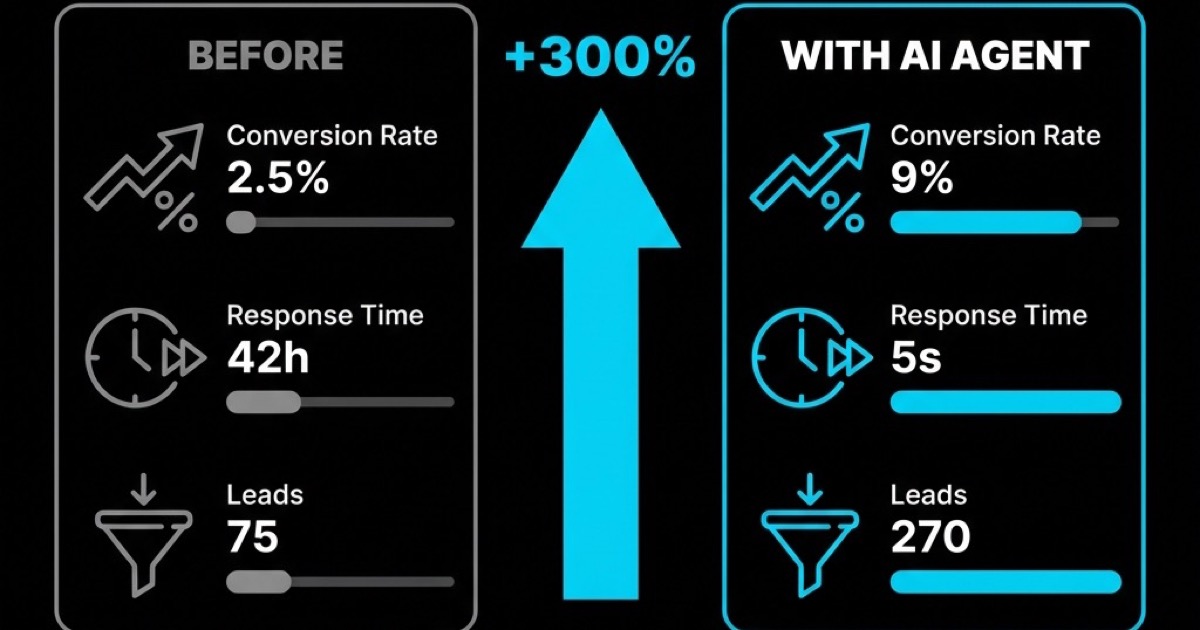
The impact on business metrics is measurable:
- Conversion rate: +150 to 300% vs. passive forms (McKinsey, 2025)
- Response time: From an average of 42 hours to under 5 seconds
- Cost per qualified lead: -60 to 75% through automated qualification
- Customer satisfaction: +20 to 35% through immediate, contextual help (Salesforce)
For a mid-sized company with 3,000 monthly website visitors, an AI Agent can triple the value of existing traffic without spending an extra euro on advertising.
Common concerns (and reality)
"Our customers want to talk to humans." True. But only in the decision phase. During research, 62% of B2B buyers prefer self-service (Salesforce, 2025). An AI Agent handles the research phase and hands over to a human when it is time to close.
"This is too complex for our industry." AI Agents are strongest when the subject matter is complex. The more variables (product variants, pricing models, individual requirements), the greater the advantage over static websites.
"What if the agent makes mistakes?" Every well-implemented agent has escalation rules. When uncertain, it hands over to a human. For sensitive topics (pricing, contracts, legal questions), it always requests human confirmation. The error risk is lower than with an inexperienced employee.
When should you start?
AI Agents make sense when at least two of these criteria apply:
- Your average customer value exceeds €2,000
- You receive more than 500 website visitors per month
- Your sales team regularly handles repetitive inquiries
- Your conversion rate is below 5%
- You sell complex products or services that require explanation
If all five apply, you are losing qualified leads every month without an AI Agent.
How Webkomodo implements AI Agents
We build AI Agents as custom systems integrated into your existing infrastructure:
- Analysis: We identify the highest-impact touchpoints on your website
- Development: Custom agent with access to your systems (CRM, calendar, product database)
- Training: The agent is trained on your company data, FAQs, and sales processes
- Integration: Seamless embedding into your website with your branding
- Optimization: Monthly monitoring and continuous improvement based on conversation data
Learn more about our AI solutions on our AI automation page. For a detailed look at how AI lead generation works, read our guide for B2B companies.
Key Takeaway
AI Agents are the next evolution beyond chatbots. They do not just answer, they act. They do not wait for instructions, they recognize situations and solve problems. For companies with complex products and a customer value above €2,000, AI Agents are no longer an experiment but a measurable competitive advantage. The question is not whether, but when.
FAQ
What does an AI Agent cost for my website?
Costs depend on the scope of features and integrated systems. A professional implementation with CRM integration, appointment booking, and custom qualification logic starts at €5,000 to €12,000 one-time, plus ongoing costs of €300 to €1,000 per month for AI processing and maintenance. With an average customer value of €5,000 and a realistic conversion increase, the investment typically pays for itself within 6 to 10 weeks.
Can an AI Agent work with my existing CRM?
Yes. Modern AI Agents use APIs to communicate with virtually any system. HubSpot, Salesforce, Pipedrive, Monday, Notion, and many others can be connected directly. The agent can create contacts, update deals, add notes, and create tasks without any manual steps. Integration is a core part of every professional implementation.
How is an AI Agent different from the chatbots I see everywhere?
Most website chatbots are rule-based systems or simple LLM wrappers that answer questions. An AI Agent can actively take action: book appointments, create proposals, update CRM entries, send emails, and execute complex workflows. The chatbot says "Our business hours are 9 to 5." The AI Agent says "I see there is an open slot tomorrow at 2 PM. Should I book that appointment for you?" and then actually does it.
Founder, Webkomodo
Ready for your project?
Let's find out how we can grow your business digitally in a free consultation.
Free consultation